
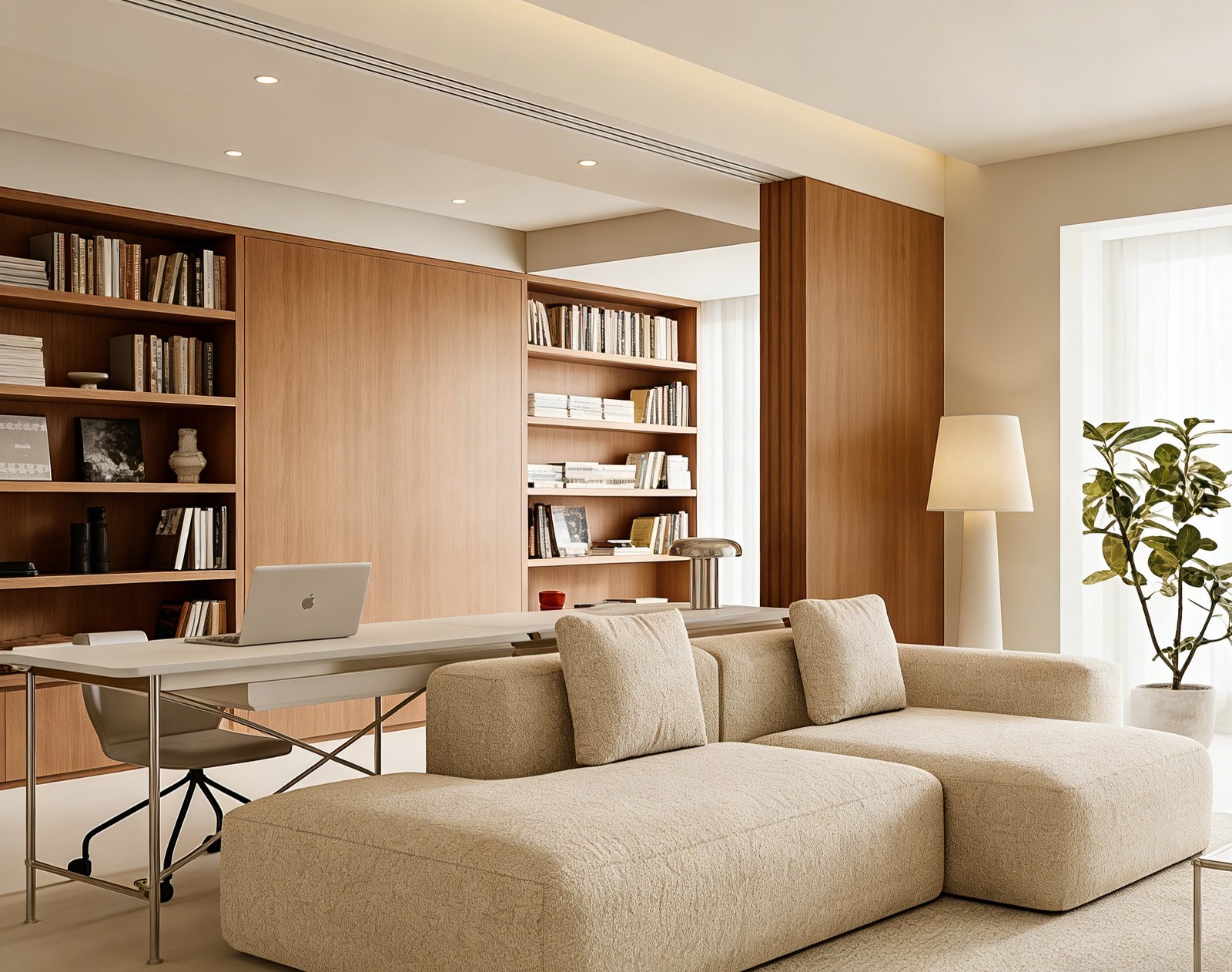
This home study connects directly with the living area and can be separated by a four-panel folding door. When open, the study remains visually connected to the living room; when closed, the folding panels create a private workspace. The built-in bookcase reaches approximately 2.4 metres high, combining open shelving, sliding door sections and large lower drawers with angled pulls. The folding door and bookcase share the same fine timber-look finish.
The 25 mm thick shelves are designed for book storage, where shelf rigidity and load-bearing capacity matter. Precision panel cutting controls shelf dimensions and squareness, while CNC machining and six-sided drilling process the cabinet connection points and shelf-support positions. Edge banding finishes the exposed panel edges, including the thick shelves within the open bookcase.
The study uses two separate door systems: a four-panel folding door at the room entrance and sliding doors within the bookcase. Their tracks and guide channels are machined into the relevant cabinet components before assembly. Hardware holes and mounting positions are pre-drilled to match the selected systems, allowing the door panels, tracks and cabinet openings to work together. Factory pre-assembly checks the fit of the components, track alignment and door movement before the parts are packed for shipment.
The large lower drawers incorporate angled pulls directly into the drawer-front design. This detail requires the front-panel machining to follow the specified profile, while the drawer-runner holes must align with the cabinet sides to support proper installation and movement.
The folding door, sliding fronts, drawer faces and bookcase panels also require coordinated grain direction. Panel layouts are planned against the production drawings, with cutting sequence and edge finishing controlled to maintain the intended timber-look appearance across the different cabinet components.




Reviews
There are no reviews yet.