
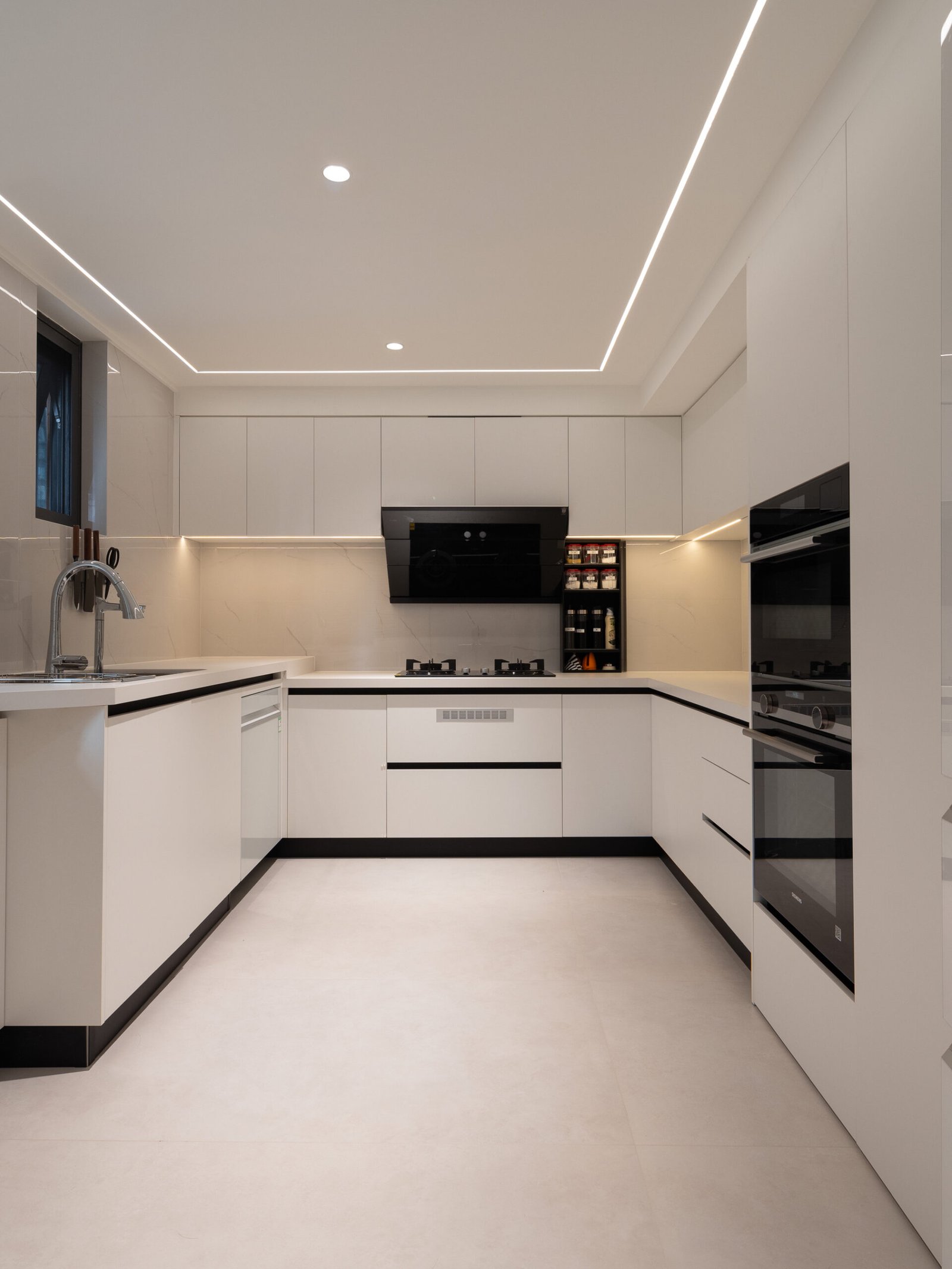
Cabinet Body Materials (Carcass / Cabinet Box)
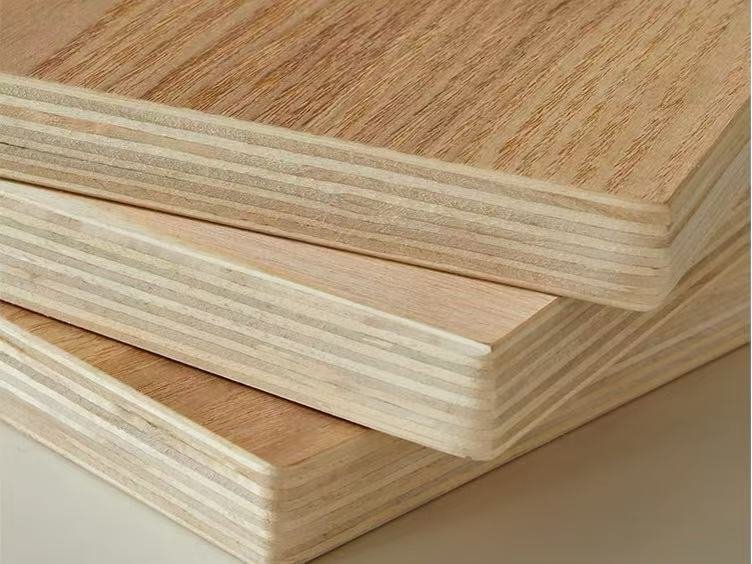
1. Waterproof Plywood (Best Overall Choice)
Waterproof plywood is the most commonly used cabinet body material in professional custom manufacturing.-
- High moisture resistance
- Excellent load-bearing strength
- Long service life
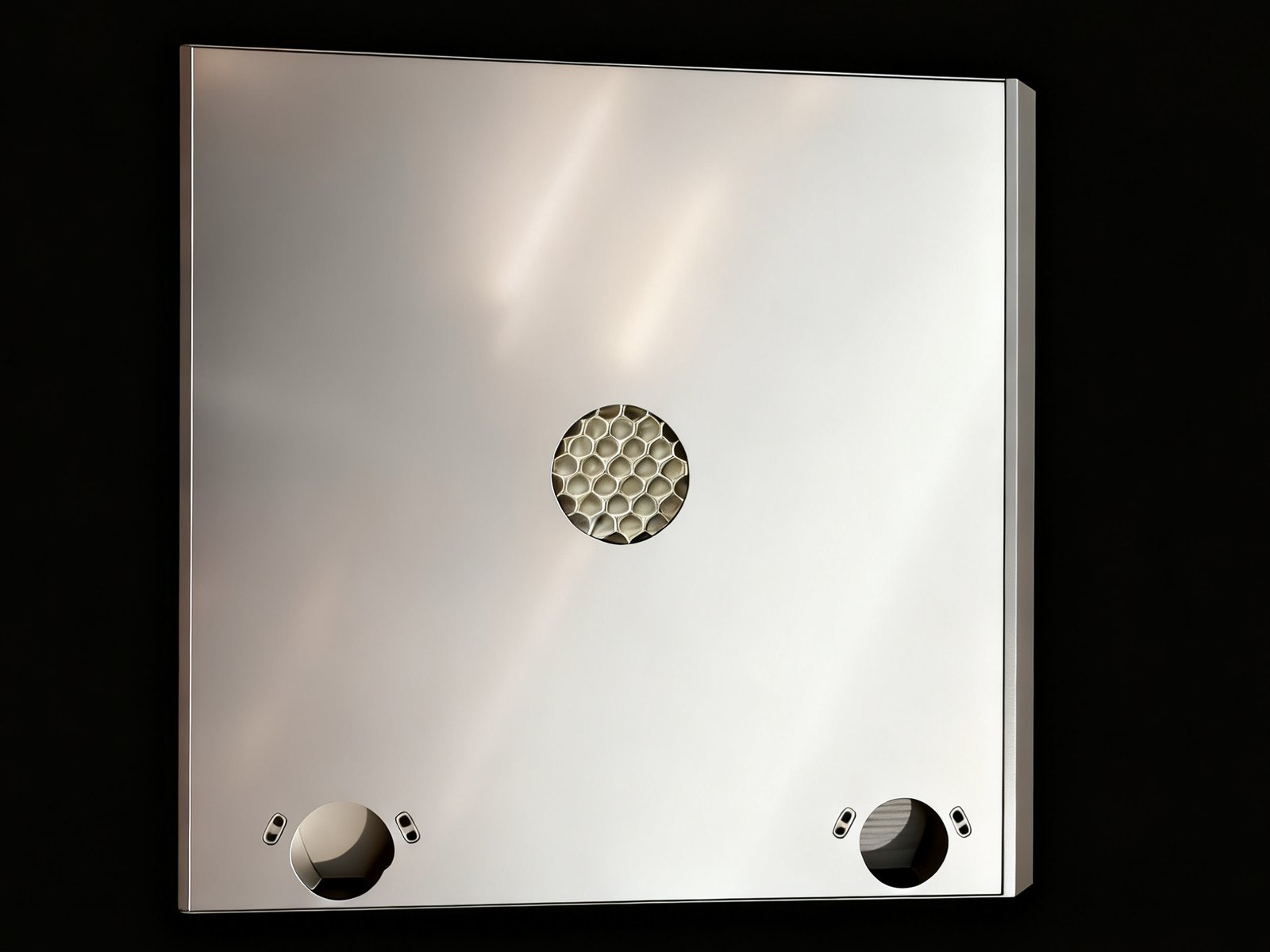
2. Stainless Steel (Premium & Commercial Choice)
Stainless steel is usually chosen for high-end homes or commercial kitchens.- Anti-mold and rust-proof
- Extremely durable
- More expensive and heavier
 Learn structure differences here:
Custom Furniture vs Ready-Made
Learn structure differences here:
Custom Furniture vs Ready-Made
Countertop Materials (Worktop)
Quartz Stone (Mainstream Choice)
- Scratch-resistant
- Water and oil resistant
- Easy maintenance
- High temperature tolerant
Cabinet Door Panel Materials (The Most Visible Element)
PET Panels (Polyethylene Terephthalate)
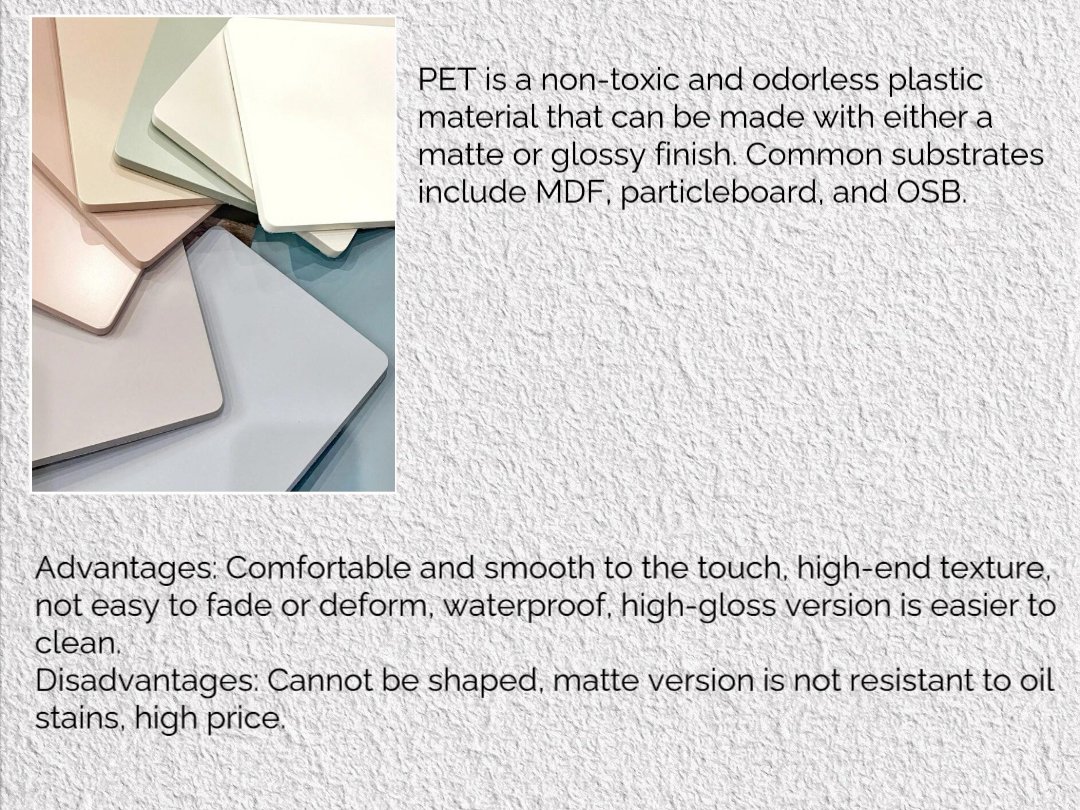 PET is a non-toxic plastic door surface available in both matte and high-gloss finishes.
Common substrates:
- MDF
- Particleboard
- OSB
Advantages:
- Silky smooth surface
- High-end texture
- Fade resistant
- Waterproof
- High-gloss version easy to clean
Disadvantages:
- Cannot be molded
- Matte version stains easily
- Higher cost
Solid Wood Veneer Panels
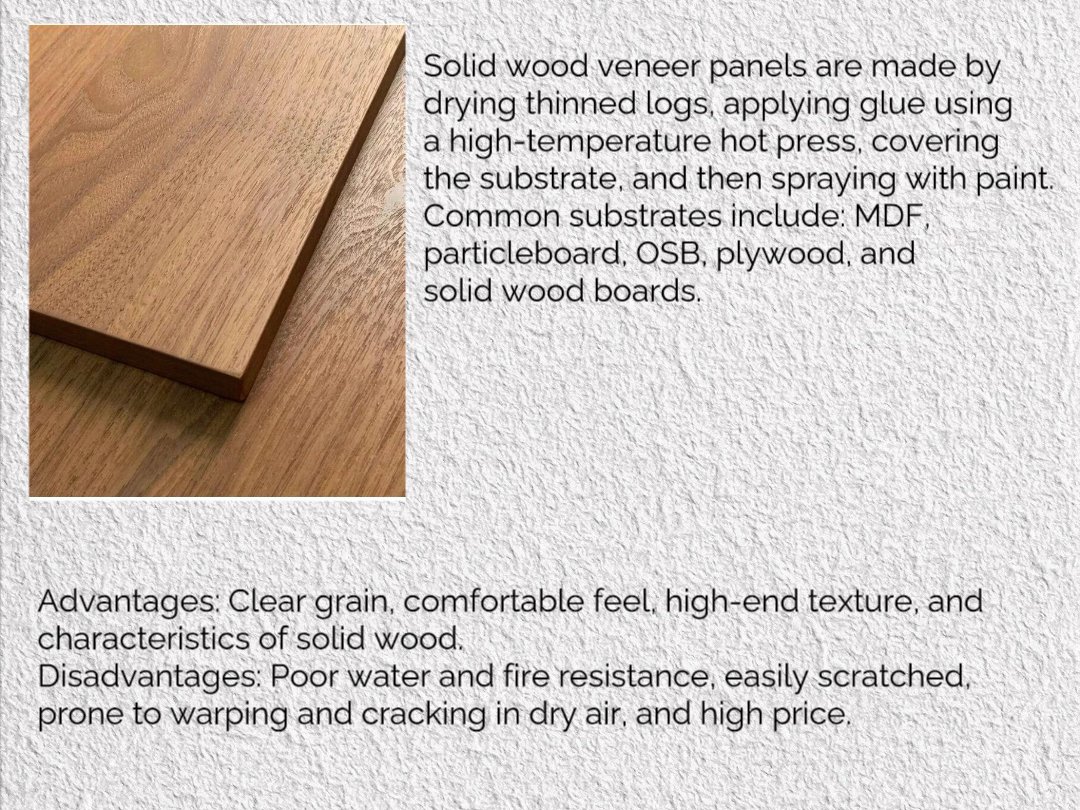 Solid wood veneer panels are made by laminating natural wood onto a substrate.
Common substrates:
- MDF
- Particleboard
- OSB
- Plywood
- Solid wood boards
Advantages:
- Natural grain texture
- Premium appearance
- Real wood feel
Disadvantages:
- Poor moisture and fire resistance
- Scratch-prone
- Likely to warp or crack in dry climates
- Expensive
Painted Panels (Lacquer Finish)
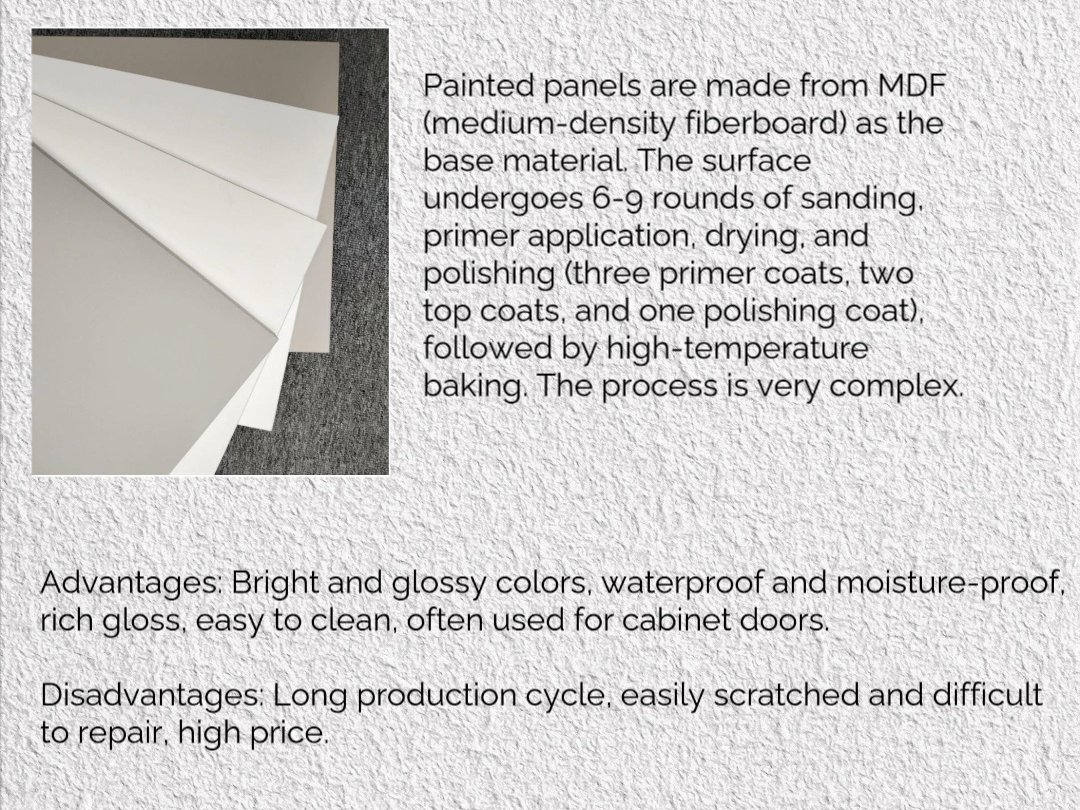 Painted panels are usually manufactured from MDF with multiple coating processes.
Advantages:
- High gloss visual effect
- Easy cleaning
- Water and moisture resistance
Disadvantages:
- Long production cycle
- Scratches are hard to repair
- Premium pricing
Melamine-Faced Panels
Description:
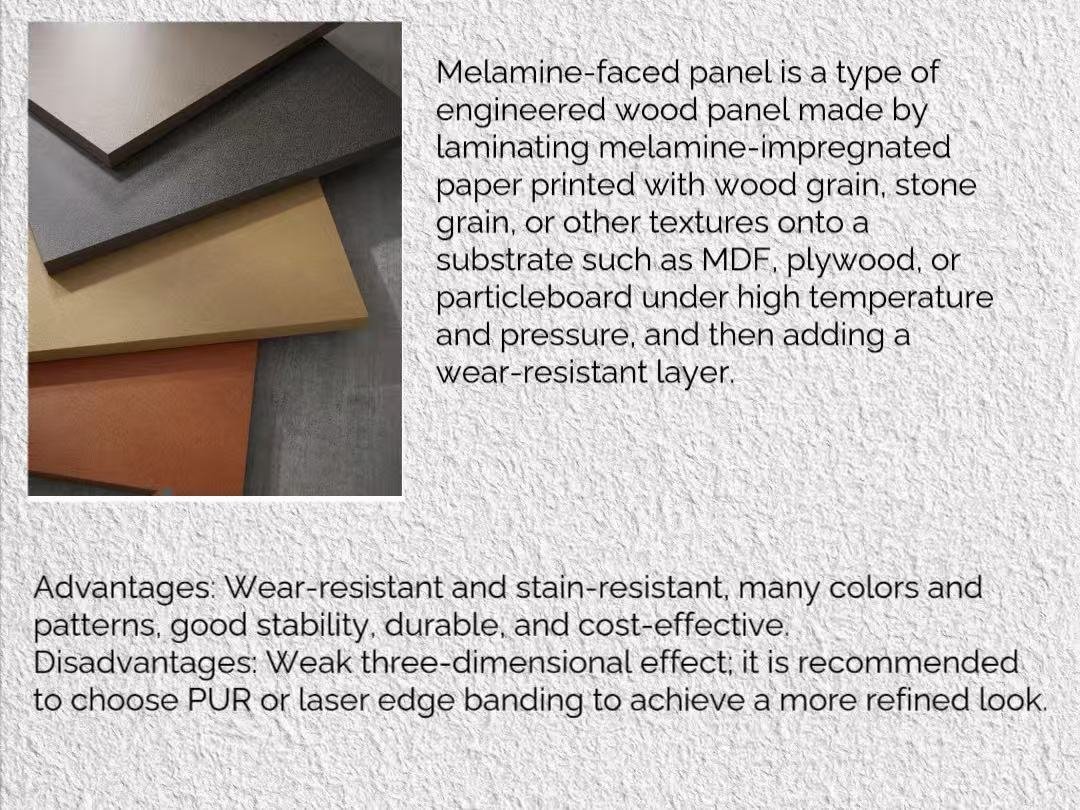
Melamine-faced panels are engineered wood panels laminated with printed decor film under high pressure.Advantages:
- Cost-effective
- Scratch and stain resistant
- Wide color and texture options
- Good structural stability
Disadvantages:
- Less depth and realism compared to veneer
Material Comparison Chart
| Material | Waterproof | Durability | Cost | Finish Grade |
|---|---|---|---|---|
| PET | Excellent | High | High | Premium |
| Veneer | Low | Medium | High | Luxury |
| Painted | High | Medium | High | Gloss |
| Melamine | Medium | High | Low | Economical |
Which Cabinet Material Should You Choose?
- Best waterproof: PET + plywood
- Best budget: Melamine-faced panels
- Best high-end look: Veneer or PET gloss
- Best durability: Stainless steel carcass