Most cabinetry issues do not originate at the factory.
They often begin when installers are standing in a client’s kitchen, attempting to patch up problems that should have been resolved before the units ever left the plant. For instance: a panel requires trimming, a hardware mounting hole is slightly misaligned, or drawer slides fail to line up correctly. Consequently, what should have been a four-hour installation job spirals into a full day of headaches. If you are frequently responsible for overseeing installation sites and troubleshooting issues, you know exactly what I am talking about.
Over the years, we have witnessed this scenario far too many times. We have long sought to resolve this issue—which is precisely why, over the years, we have progressively shifted more and more production processes back into our factory.
During cabinetry installation, once on-site drilling and cutting become necessary, matters tend to escalate rapidly—potentially leading to uncontrollable errors—especially when modern hardware systems are involved.
Take, for example, the installation of Blum drawers, handle-less designs, or push-to-open systems. While these mechanisms look sleek and elegant once completed, their installation leaves absolutely no room for error. A deviation of just a few millimeters can quickly trigger a cascade of problems—ranging from rough operation and misaligned gaps to a reduced service life for the cabinetry itself.
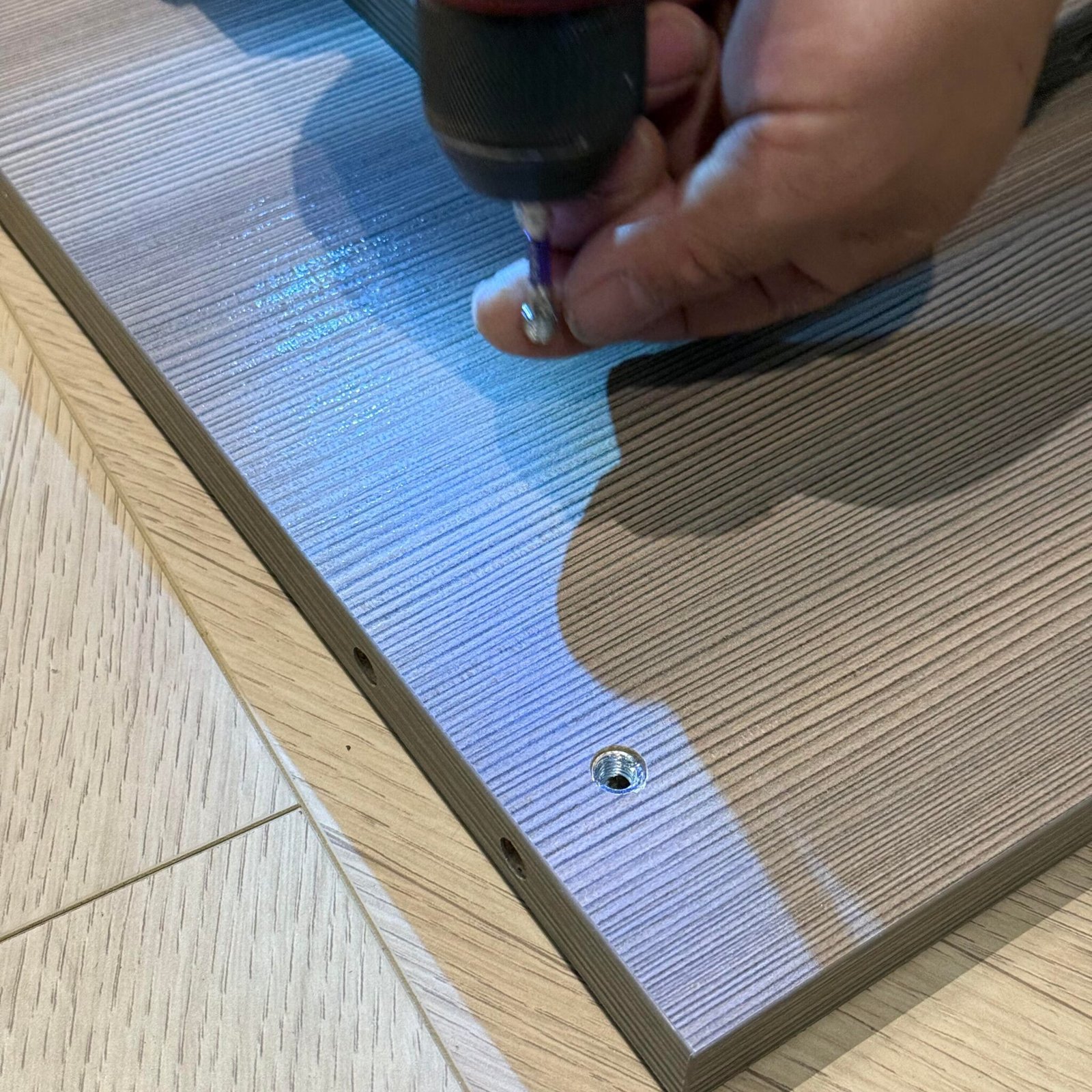
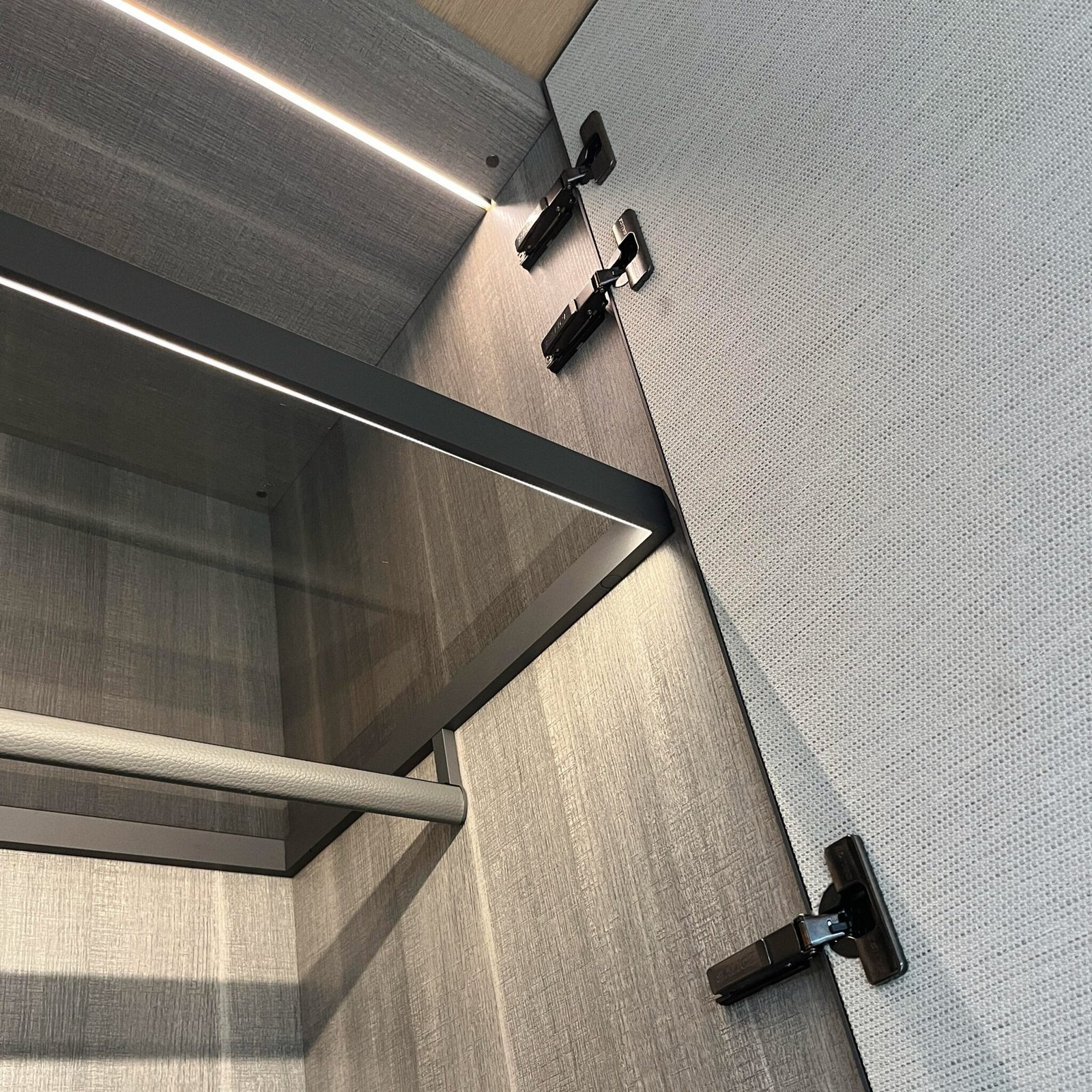
After years of continuous refinement, our solution has become remarkably simple: resolve every potential issue within the factory before the cabinetry ships out. This entails pre-drilled panel holes, factory-applied edge banding, and precise, standardized hole positioning—all designed to minimize on-site guesswork for installers. Instead of having to perform complex hardware alignments on-site, they simply need to drive in the screws.
Frankly, installers already have more than enough to handle on-site. They should not be forced to simultaneously troubleshoot manufacturing defects while trying to complete the installation work itself.
For us, adopting a “systems-based manufacturing model” does not—by any means—imply that our cabinetry products will lack personalization or customization. On the contrary, the core objective is to ensure that every custom project becomes more controllable, more consistent, and ultimately, can be delivered to the client with greater ease and perfection.
Modular Cabinet Systems
https://zhemoo.com/product-category/custom-furniture/kitchen-cabinets/